
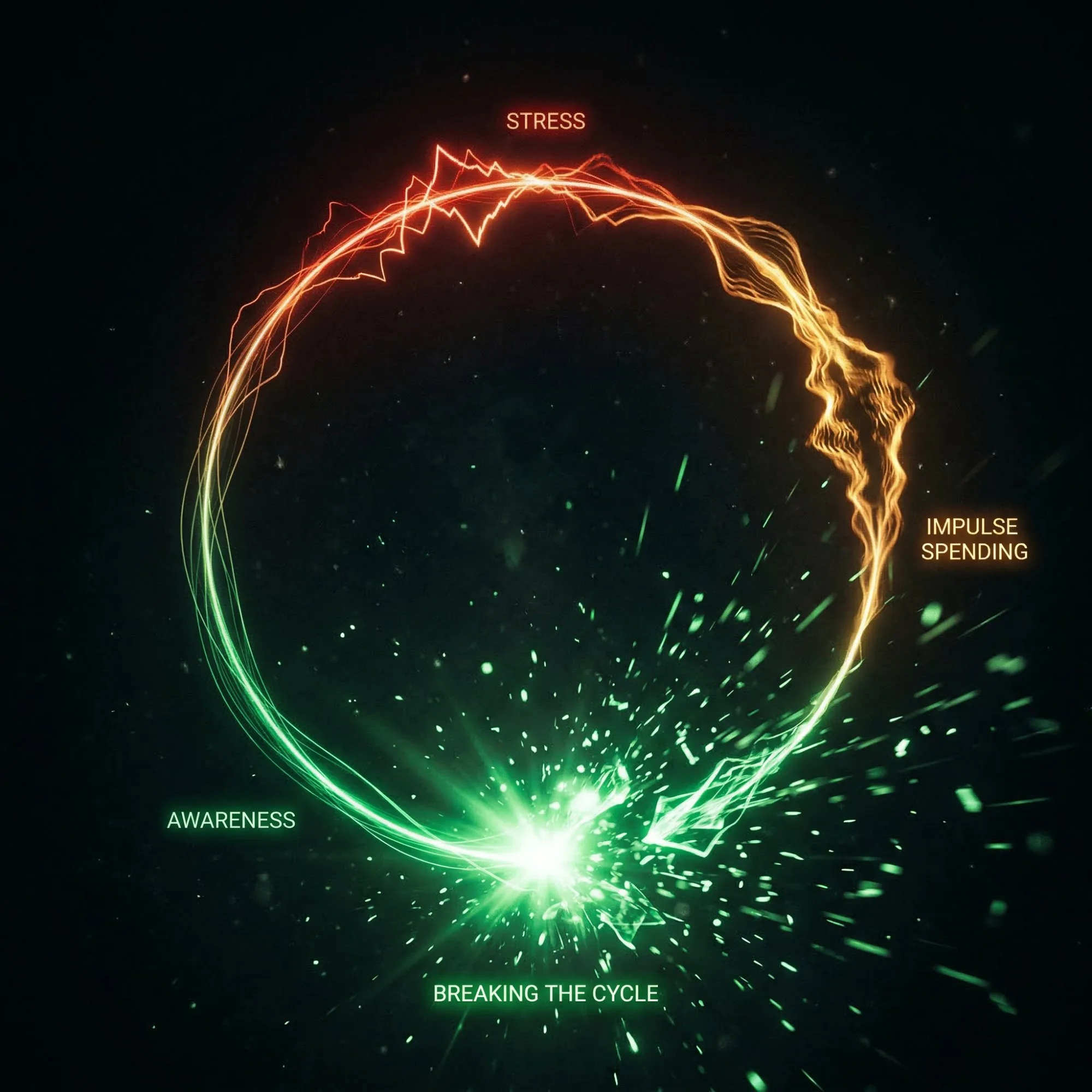
Stress Spending: Why You Buy More When Life Gets Hard (And How to Stop)
The Stress-Spending Connection
When cortisol (stress hormone) floods your system, it suppresses activity in the prefrontal cortex — the brain region responsible for long-term planning, impulse control, and rational decision-making. Simultaneously, it amplifies activity in the amygdala, which drives emotional reactions.
The result: under stress, your brain literally becomes worse at making financial decisions. This is not a metaphor — it is measurable neuroscience. fMRI studies show that stressed individuals have 37% less activity in prefrontal regions during purchasing decisions compared to their relaxed state.
Common Stress Spending Patterns
The Late-Night Scroll
After a hard day, you collapse on the couch and scroll through your phone. Exhausted and emotionally drained, you browse shopping apps. The purchases feel deserved — "I had a rough day, I earned this." By morning, you regret the $87 cart you checked out at 11 PM.
The Payday Splurge
The tension of stretching money all month creates accumulated stress. When payday hits, the relief triggers a reward response. You spend freely in the first 48 hours, then struggle for the remaining 28 days. This cycle repeats every month.
The Comfort Purchase
Bad news, an argument, loneliness, or anxiety triggers a need for comfort. Shopping provides temporary emotional regulation — the dopamine hit of a new purchase briefly masks the negative emotion. But the comfort fades, and the financial consequences add new stress.
The End-of-Month Collapse
As savings dwindle toward month-end, financial anxiety builds. Paradoxically, some people respond to financial stress by spending more — a "what's the point" mentality where they abandon budget discipline entirely because the situation already feels hopeless.
How to Break the Stress-Spending Cycle
Step 1: Identify Your Stress Triggers. Track not just what you spend, but how you feel when you spend. After two weeks of noting your emotional state alongside purchases, patterns will emerge. You might discover that 80% of your unnecessary spending happens in three specific emotional states.
Step 2: Create Alternative Responses. For each trigger, prepare a non-financial response. Stressed after work? Walk for 15 minutes instead of browsing Amazon. Lonely on Sunday evening? Call someone instead of online shopping. The goal is not to suppress the emotion but to redirect the response.
Step 3: Add Friction at Vulnerable Moments. If you know you stress-spend at night, delete shopping apps from your phone after 8 PM (re-download them in the morning if needed). If payday triggers splurging, automate savings transfers on the same day so less money is available for impulse spending.
Step 4: Let Technology Watch Your Blind Spots. You cannot be self-aware 24/7 — especially when stressed. SpendTrak's behavioral engine detects stress spending patterns automatically. It identifies when you are in a vulnerable state based on spending velocity, time of day, and historical patterns — and provides a moment of awareness at exactly the right time.
Frequently Asked Questions
Yes. Research from the Journal of Consumer Psychology shows that acute stress increases impulsive purchasing by 40-60%. The neurological mechanism is well-documented: cortisol suppresses the prefrontal cortex while amplifying emotional decision-making centers.
Shopping triggers dopamine release, temporarily elevating mood. Your brain learns this association and begins using purchases as an emotional regulation tool — similar to how some people use food or alcohol to manage emotions.
The most effective approach combines awareness (knowing your stress triggers), friction (removing easy access to purchasing during vulnerable times), and behavioral technology that intervenes at the pattern level. SpendTrak detects stress spending patterns and creates awareness at the exact moment — before the purchase, not after.
Stop Tracking. Start Changing.
SpendTrak uses behavioral AI to detect your spending patterns and intervene at the right moment. Not advice. Not judgment. Just a mirror.

Stress spending can be a trauma response when shopping becomes a primary coping mechanism for emotional distress. The brain learns to associate purchasing with emotional relief, creating a neurological loop. If stress spending feels uncontrollable, speaking with a financial therapist can help address the underlying patterns.
Part of the SpendTrak Spending Psychology Library
Read the Complete Spending Psychology Guide →