
Why You Are Always Broke Before Payday (And the Behavioral Fix)
The End-of-Month Collapse Is Not About Math
If running out of money before payday were a math problem, a spreadsheet would fix it. But you already know the math: earn X, spend less than X, save the difference. The problem is not knowledge. The problem is behavior.
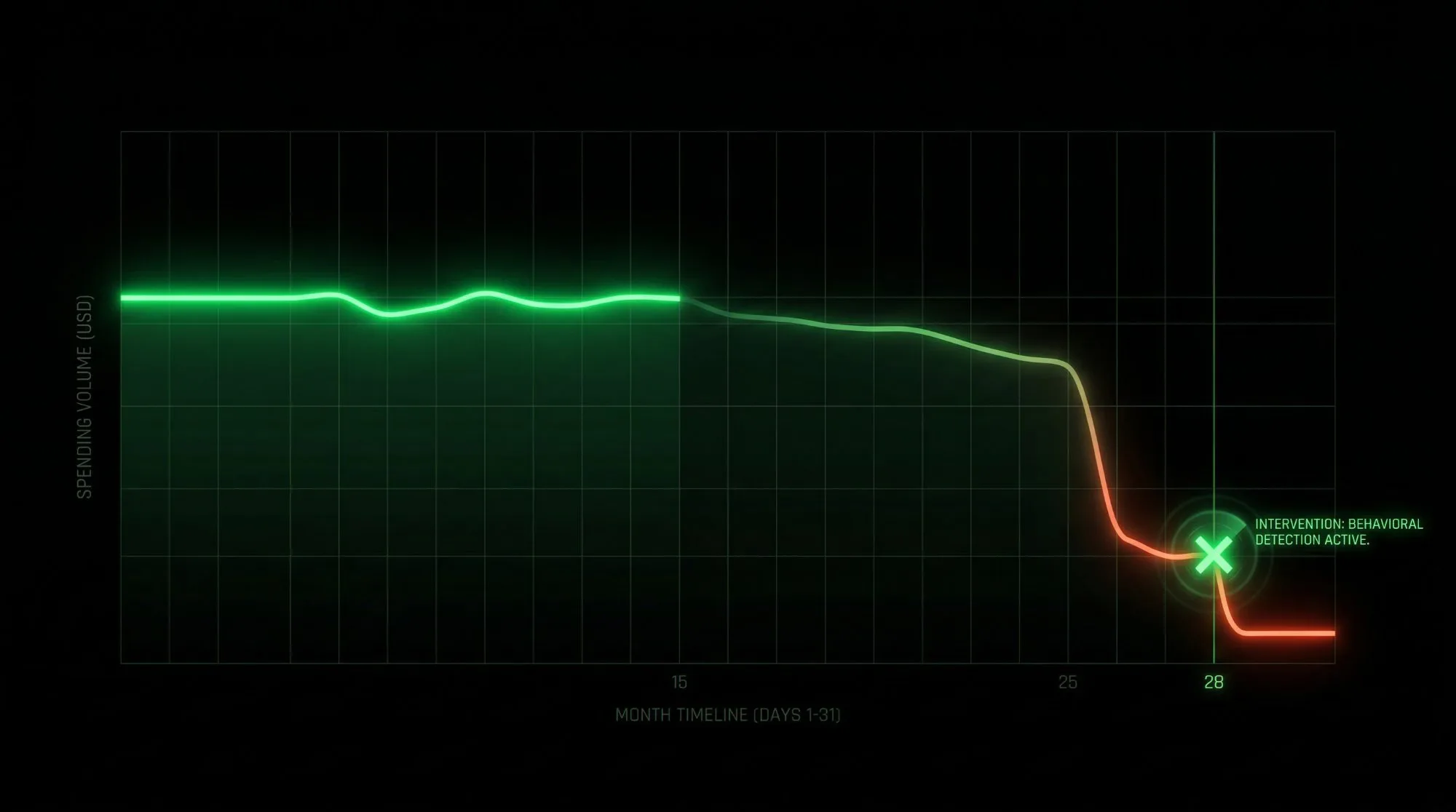
The end-of-month collapse follows a predictable behavioral pattern: optimism in week 1 (you just got paid, money feels abundant), gradual loosening in week 2, concern in week 3, and panic or resignation in week 4. This cycle repeats every single month, regardless of income level.
The Behavioral Science Behind the Monthly Cycle
Present Bias — The Fundamental Problem
Your brain values present rewards 2-3x more than future rewards. $50 in your pocket today feels worth more than $50 next week. This means the "future you" who will be broke on day 28 is, psychologically, a stranger whose problems do not feel real to "present you" on day 1.
Mental Accounting — Payday Reset
Each payday creates a psychological "reset." The struggles of last month feel like they belonged to a different financial life. Fresh money = fresh start = permission to spend. This is why simply earning more does not solve the problem — higher income just means a bigger version of the same cycle.
Hyperbolic Discounting — The Decay Curve
Your commitment to saving decays over time. On payday, motivation is at 100%. By day 7, it is at 60%. By day 14, it is at 30%. By day 21, you have largely abandoned your budget. This is not failure — it is how every human brain processes delayed rewards.
The Fix: Behavioral Design, Not Budget Spreadsheets
1. Automate on Day 1. The moment your salary hits, automatically transfer savings, bill payments, and investment contributions. Leave only your true discretionary budget in your spending account. What you do not see, you do not spend.
2. Break the Month Into Weeks. A monthly budget is psychologically overwhelming — 30 days of discipline. A weekly budget is manageable — 7 days at a time. Divide your discretionary budget by 4 and manage one week at a time.
3. Create Visual Countdown. Your brain responds to visual signals. A budget bar showing "67% remaining, 22 days left" creates awareness that a number in a spreadsheet cannot match.
4. Get Pattern-Level Intervention. SpendTrak detects the end-of-month collapse as a behavioral pattern. Its End-of-Month Collapse Alert activates when spending velocity increases relative to remaining budget — giving you awareness before the pattern completes, not a guilt report after.
Frequently Asked Questions
The end-of-month money collapse is a behavioral pattern driven by present bias, mental accounting resets at payday, and hyperbolic discounting of future financial pain. It affects people at every income level because it is a psychological pattern, not an income problem.
The most effective approach is automation (move savings and bills on day 1), weekly budgeting (divide monthly discretionary budget by 4), and behavioral awareness tools that alert you when your spending velocity indicates an approaching collapse.
Stop Tracking. Start Changing.
SpendTrak uses behavioral AI to detect your spending patterns and intervene at the right moment. Not advice. Not judgment. Just a mirror.

Part of the SpendTrak Spending Psychology Library
Read the Complete Spending Psychology Guide →